Why is Et Fiber Essential for High-Speed Internet Connectivity
In today's increasingly connected world, the demand for high-speed internet connectivity has never been greater. As consumers and businesses alike rely on fast and reliable internet for their daily operations, the role of advanced technologies becomes pivotal in meeting these demands. One of the critical components driving this transformation is "Et Fiber." This cutting-edge optical fiber technology offers unparalleled speeds and bandwidth capabilities, making it an essential choice for internet service providers seeking to enhance their offerings.
Et Fiber stands out in its ability to transmit data over long distances with minimal signal loss, ensuring that users experience faster download and upload times. The advent of fiber optic technology, particularly Et Fiber, has revolutionized how we connect, stream, and communicate, allowing for seamless browsing, high-definition video streaming, and effortless cloud computing. In the context of smart homes and emerging applications like virtual reality, the necessity for robust bandwidth is unmistakable.
As we delve deeper into the significance of Et Fiber, it becomes evident that this technology not only meets the needs of today's digital landscape but also paves the way for future advancements. Understanding its vital role in establishing a high-speed internet infrastructure will shed light on how we can successfully navigate our increasingly digital lives.

What is Et Fiber and How Does it Work?
Et Fiber, or Ethernet Fiber, is a high-speed internet technology that leverages fiber optic cables to transmit data at incredible speeds. Unlike traditional copper cables, which rely on electrical signals, fiber optics use light to send information, resulting in much higher bandwidth capabilities and faster data transfer rates. This is particularly important in today's digital age, where the demand for fast and reliable internet connectivity continues to grow due to streaming services, online gaming, and remote work.
The operation of Et Fiber is based on the principle of total internal reflection. When light travels through the thin strands of glass or plastic that make up the fiber optic cable, it is reflected along the walls of the cable, allowing it to travel long distances without significant loss of signal. This mechanism enables Et Fiber to maintain a stable and high-quality connection over large networks, making it an ideal solution for businesses and homes alike.
With its capacity to handle massive amounts of data simultaneously, Et Fiber is essential for supporting a wide range of applications, from everyday internet browsing to high-definition video conferencing.
The Role of Et Fiber in Internet Speed and Reliability
Et fiber, or Ethernet fiber, plays a critical role in enhancing internet speed and reliability. Unlike traditional copper cables, fiber optics utilize light to transmit data, allowing for much higher bandwidth capabilities. This facilitates faster data transfer rates, which can reach up to several gigabits per second, making it ideal for high-speed internet connectivity. As the demand for bandwidth-intensive activities—like streaming, gaming, and video conferencing—increases, the importance of et fiber becomes evident. It minimizes latency and buffering, providing a more seamless online experience.
Additionally, the reliability of et fiber is paramount in maintaining consistent internet service. Fiber cables are less susceptible to electromagnetic interference and environmental factors compared to copper lines, ensuring a stable connection even in challenging conditions. This durability means that businesses and consumers alike can rely on et fiber for uninterrupted service, which is essential in today’s digital landscape. With the proliferation of remote work and online services, having a robust and speedy internet connection is more important than ever, making et fiber an indispensable component of modern connectivity.
Comparison of Et Fiber with Other Internet Connectivity Options
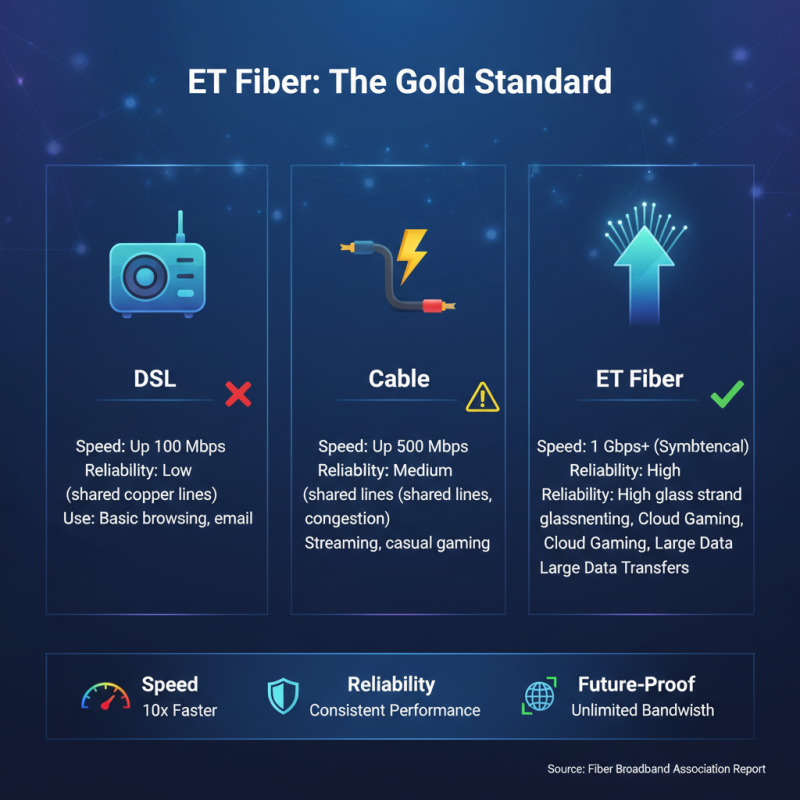
ET fiber, or Ethernet fiber, has emerged as the gold standard for high-speed internet connectivity due to its remarkable advantages over traditional options such as DSL and cable. According to a report from the Fiber Broadband Association, fiber optic technology can provide internet speeds exceeding 1 Gbps, which is significantly faster than the typical maximum of 100 Mbps offered by DSL services. This enhanced speed is crucial for households and businesses that require reliable and efficient internet services for activities such as video conferencing, online gaming, and large-scale data transfers.
Moreover, ET fiber presents lower latency rates compared to cable and DSL connections, which is a critical factor for real-time applications. A study from the International Telecommunication Union indicates that latency for fiber connections can be as low as 1 millisecond, while cable systems may exhibit latency upwards of 20 milliseconds. This difference can drastically affect user experience, especially in environments where instantaneous data transfer is essential. Thus, as the demand for bandwidth continues to rise, ET fiber stands out as the most effective solution, surpassing legacy technologies in both speed and reliability.
Challenges and Limitations of Implementing Et Fiber Technology
The implementation of Ethernet (Et) fiber technology is crucial for delivering high-speed internet connectivity, but several challenges and limitations can hinder its widespread adoption. One of the primary challenges is the significant cost associated with deploying fiber optic infrastructure. Laying down fiber cables involves excavation, labor, and advanced equipment, which can be prohibitively expensive, especially in densely populated urban areas where existing utilities must be navigated.
Furthermore, existing regulatory frameworks and local government policies can complicate fiber installation projects. These regulations may include lengthy permit processes and restrictions on digging or altering public spaces, leading to delays and increased costs. Additionally, the need for specialized technicians to install and maintain fiber systems can exacerbate labor shortages, particularly in regions that lack a trained workforce.
Tip: When exploring fiber deployment options in your area, consider partnering with local municipalities to understand potential incentives or support they may offer for infrastructure development.
Another limitation is the physical constraints related to fiber installation. In some locations, geographical features, such as hills or waterways, can make it difficult to lay down fiber cables efficiently. Moreover, existing infrastructure may pose obstacles, requiring creative engineering solutions that can add complexity and cost to the project.
Tip: Engage with professionals who specialize in network design to assess the best strategies for overcoming geographical and infrastructural challenges in your area.
Future Trends in Et Fiber and High-Speed Internet Connectivity
The future of Et fiber technology promises to significantly enhance high-speed internet connectivity across various sectors. As demand for faster and more reliable internet grows, Et fiber's capabilities in transmitting data over long distances without degradation are becoming increasingly vital. This technology provides the foundational infrastructure necessary for bandwidth-heavy applications, such as 4K streaming, virtual reality, and the burgeoning realm of smart cities.
Emerging trends in Et fiber, including advancements in fiber optics and network management systems, are likely to drive further innovations in internet connectivity. The adoption of new materials and technologies may facilitate even greater transmission speeds and reduce latency, creating seamless experiences for users. Additionally, as the internet of things (IoT) accelerates, the need for robust and scalable fiber networks will be critical. This dynamic landscape suggests that investing in Et fiber infrastructure today will pave the way for a more connected and efficient digital ecosystem in the near future.
Impact of Et Fiber on High-Speed Internet Connectivity