How to Wash Reusable Sanitary Pads Properly?
Reusable sanitary pads can reduce daily waste, but good care starts with clean hands and a clear routine. Rinse a used pad in cool water until the water runs clearer. Then wash it with detergent, following the maker’s care label. Hot water may set some stains, so begin cold. Simple, but worth doing carefully.
UNICEF’s 2019 menstrual health guidance estimated that at least 500 million women and girls worldwide lack adequate facilities for menstrual hygiene management. That finding highlights why practical washing advice matters. The WHO and UNICEF definition describes menstrual health as “a state of complete physical, mental, and social well-being” in relation to the menstrual cycle. Clean water, privacy, and enough drying time are part of the real-world picture.
For anyone searching “Washing Reusable Sanitary Padsfiber,” the key steps are straightforward: rinse, wash thoroughly, and dry the pad completely before storing or wearing it again. Air-drying in a clean, well-ventilated place helps prevent lingering dampness. Check the care label; fabrics and absorbent layers can differ. A sunny windowsill may help, but a damp pad is not ready to reuse.
One limitation deserves honesty: without a verifiable source, I can’t attribute a quotation to a named industry expert. The guidance here follows public-health recommendations, not an invented expert endorsement. Small habits matter. And careful drying is easy to overlook.
Check Care Labels and Keep Used Pads Separate from Clean Laundry
Check the care label before washing; fabrics, absorbent layers, and fastenings can respond differently to heat. Follow its instructions for water temperature, detergent, and drying. If the label is missing, use a gentle wash and avoid hot water until you know how the pad handles it. A small test helps.
Keep used pads away from clean laundry, towels, and underwear. Place them in a dedicated washable wet bag or separate laundry container until wash day. Don’t leave damp pads sealed away for several days; moisture can encourage odors and mildew. Wash your hands after handling them. It is easy to assume a quick rinse makes storage harmless, but the pad still needs a proper wash.
When you are ready, wash the pads according to their labels, either together or with similar laundry. Avoid overcrowding the machine so water can move through the layers. Check seams and absorbent areas before drying; lingering stains may need another wash, not aggressive scrubbing. Let each pad dry completely before storing it. If the label allows machine drying, use its recommended setting; otherwise, air-dry it fully. A slightly longer drying time is better than putting away a damp pad.
Rinse Promptly in Cold Water; Follow the CDC’s 20-Second Handwashing Benchmark
Rinse a used reusable sanitary pad as soon as practical under cold running water. Press gently until the water runs clearer; avoid twisting, which can strain the fabric. Cold water helps. A quick rinse can loosen blood before it dries, though a faint stain may remain. That does not automatically mean the pad is unclean. Follow the care instructions for your pad, and wash it with detergent at the recommended temperature. Hot water may make some stains harder to remove.
Wash your hands with soap and water after handling the used pad and before touching a clean one. Use the CDC’s 20-second benchmark: scrub your palms, the backs of your hands, between your fingers, and under your nails. Twenty seconds can feel longer than expected. I sometimes lose track, so counting slowly is a practical reminder. Rinse your hands well and dry them with a clean towel. If you cannot wash the pad right away, store it in a breathable or washable wet bag, then rinse it when you can. Let the pad dry completely before storing it; damp fabric can develop an unpleasant odor. Follow its care label, since materials and construction differ.
Wash with Detergent at Label Settings; ISO 6330:2021 Covers 30–95°C
How to Wash Reusable Sanitary Pads Properly?
Rinse a used pad in cool water until the water runs mostly clear. Avoid hot water at this stage; heat can make blood stains harder to remove. Then wash with detergent, following the pad’s care label and the detergent’s recommended amount. A mesh laundry bag can keep pads together in the wash. Use the label’s temperature and cycle settings. Do not guess.
ISO 6330:2021 describes standardized domestic washing and drying procedures for textile testing, with temperatures ranging from 30°C to 95°C. That range is not a recommendation to wash every pad at the highest setting. Pads may include absorbent fabrics, elastic, or a waterproof layer, and high heat can shorten their useful life. Check the care label before choosing a temperature; if it is missing, a cooler cycle is a cautious starting point. Skip fabric softener if the care instructions advise against it, since residue may affect absorbency. Let the pad dry fully before storing it. One small uncertainty remains: fabric blends vary, so the same setting may not suit every pad.
How to Wash Reusable Sanitary Pads Properly? - Wash with Detergent at Label Settings; ISO 6330:2021 Covers 30–95°C
| Care Stage |
Recommended Practice |
Practical Detail |
| Check the care label |
Follow the pad’s stated washing and drying instructions. |
Materials, construction, and permitted temperatures vary. The label takes priority over general guidance. |
| Rinse after use |
Rinse promptly in cool water until the water runs mostly clear. |
Cool water helps remove blood before laundering. Avoid starting with hot water, which can make protein-based stains harder to remove. |
| Store before washing |
If you cannot wash the pad right away, keep it in a breathable or washable wet bag and launder it as soon as practical. |
Do not leave damp pads sealed away for extended periods; prolonged damp storage can encourage odor and microbial growth. |
| Choose a wash temperature |
Use a temperature permitted by the care label; a routine wash at 30–40°C is suitable for many washable textile items. |
Do not assume that the highest temperature is best. ISO 6330:2021 specifies domestic washing and drying procedures for textile testing, with procedures covering temperatures in the 30–95°C range; it is not a universal care instruction for every pad. |
| Add detergent |
Use a regular laundry detergent and follow its dosing instructions for the load size and water conditions. |
Too much detergent can leave residue. Avoid fabric softener unless the pad’s care instructions specifically allow it, as residues may affect absorbency. |
| Load the washing machine |
Wash with similar colours and fabrics, leaving enough room for items to move freely. |
A mesh laundry bag can help keep small pads together while still allowing water and detergent to circulate. |
| Check after washing |
Inspect the pad before drying; repeat the wash if visible staining or detergent residue remains. |
A stain does not by itself show that a pad is unclean. Avoid harsh stain treatments unless they are compatible with the care label and fabric. |
| Dry completely |
Air-dry or tumble-dry only as permitted by the care label. |
Make sure the absorbent layers are fully dry before storing. High heat may damage some fabrics, waterproof layers, or elastic components. |
| Store clean pads |
Store fully dry pads in a clean, dry place. |
Keeping clean pads separate from used or damp items helps prevent moisture transfer and unwanted odors. |
Key point: Use detergent and the washing and drying settings allowed by the product’s care label. ISO 6330:2021 is a textile-testing standard that defines domestic laundering procedures; its temperature range should not be interpreted as a recommendation to wash every reusable sanitary pad at any particular temperature.
Rinse Thoroughly and Sun-Dry When Possible, Following WHO/UNICEF Guidance
After use, rinse a reusable pad under cool, clean water until the water runs mostly clear. This helps remove blood before it dries into the fabric. Gently press the pad; avoid twisting it hard, which may damage the layers. Wash it with soap and clean water, following the care instructions for its material. Rinse out all soap. Residue can irritate sensitive skin. Small detail, but important.
WHO/UNICEF menstrual-health guidance highlights access to water, soap, and hygienic drying and storage. Sun-dry the washed pad when possible, with the absorbent side exposed to sunlight. Make sure it is completely dry before storing it in a clean, dry place. If sunlight is unavailable, hang it in a well-ventilated area instead. Drying indoors may take longer, and a slightly damp pad should not be packed away. Privacy can make outdoor drying difficult; that is real, not a personal failure. Choose the cleanest practical spot, and wash your hands after handling used pads.
Store Fully Dry in a Clean, Dry Place, as WHO/UNICEF Advises
How to Wash Reusable Sanitary Pads Properly?
After washing, focus on what happens next: let each pad become completely dry before storing it. WHO/UNICEF’s 2019 Guidance on Menstrual Health and Hygiene recommends keeping reusable menstrual materials clean and dry between uses. Hang pads in a well-ventilated spot, with enough space for air to move around them. Sunlight can help when available, but a clean indoor drying area works too. Avoid folding or stacking damp pads. They may feel dry on the surface while remaining moist in thicker layers. No shortcuts here.
Store fully dry pads in a clean, dry container or drawer, away from bathroom splash and dust. A breathable cloth bag can help prevent trapped moisture; avoid sealing pads away while they are still warm or damp. It is easy to rush this step when laundry piles up. Check seams and absorbent layers by touch, and give them more drying time if they feel cool or clammy. WHO/UNICEF’s Joint Monitoring Programme reported that 2 billion people lacked basic hygiene services at home in 2022. That figure does not measure pad storage, but it highlights why private, suitable washing and drying spaces are not available to everyone. Choose the cleanest, driest practical place in your home.
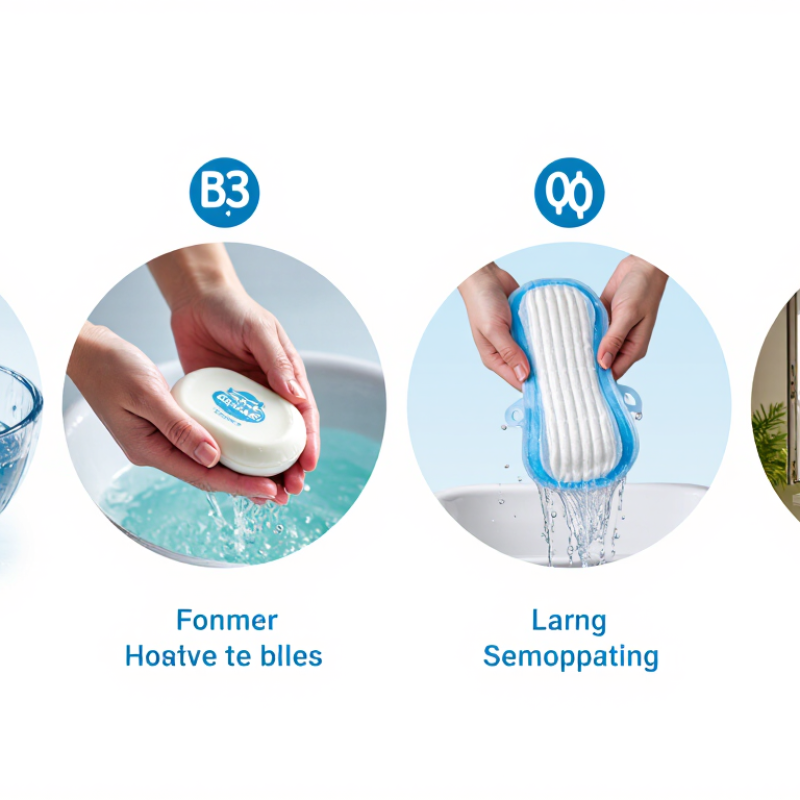
How to Wash Reusable Sanitary Pads Properly
A simple wash-to-storage sequence
How to read this chart: The numbers show the order of the care steps, not washing times or measured results. Follow the pad’s care instructions, make sure it is fully dry, and store it in a clean, dry place.