2026 Top Trends in Hollow Conjugated Fiber Technology and Applications?
Hollow Conjugated Fiber technology is reshaping various industries. This innovative material features a unique structure, enhancing its utility in textiles and composites. It offers excellent insulation properties, lightweight performance, and superior durability. These characteristics make it increasingly popular in applications ranging from apparel to advanced engineering solutions.
In 2026, trends indicate a growing interest in eco-friendly fibers. The production of Hollow Conjugated Fiber is becoming more sustainable. Manufacturers are exploring renewable resources and recycling methods. This shift is not just beneficial for the environment. It reflects a larger trend towards responsible consumption.
Hollow Conjugated Fiber's application potential is vast. From sportswear that enhances athletic performance to automotive components that reduce weight, its versatility is striking. However, challenges remain in upscaling production while maintaining quality. The evolution of this technology invites both innovation and critical reflection on its impacts. Hence, understanding these trends is essential for stakeholders in the industry.

Emerging Innovations in Hollow Conjugated Fiber Manufacturing Processes
The evolution of hollow conjugated fiber manufacturing is poised to redefine multiple sectors, particularly in textiles and materials engineering. According to a recent report by Research and Markets, the hollow fiber market is expected to reach $12 billion by 2026. This growth is fueled by innovations in production techniques, which enhance the efficiency and sustainability of fiber creation.
Advanced spinning technologies, such as melt spinning and electrospinning, allow for precise control over fiber morphology and properties, resulting in improved performance in thermal insulation and moisture management.
Emerging manufacturing processes are also focusing on sustainability. Biodegradable polymers and eco-friendly production methods are becoming more prevalent. Data from the Fiber and Textile Institute highlights that manufacturers are now reducing carbon footprints by up to 30%. However, challenges remain in scaling these processes without compromising on quality. Industry professionals are continually researching how to balance performance and environmental impact, often facing a trade-off in material durability.
These innovations are not just changing the industry landscape; they are also sparking conversations regarding ethical production. Stakeholders are questioning existing practices and pushing for transparency in sourcing and manufacturing. The hollow conjugated fiber sector must navigate these complex demands and reflect on its ongoing evolution.
Key Applications of Hollow Conjugated Fibers in Various Industries
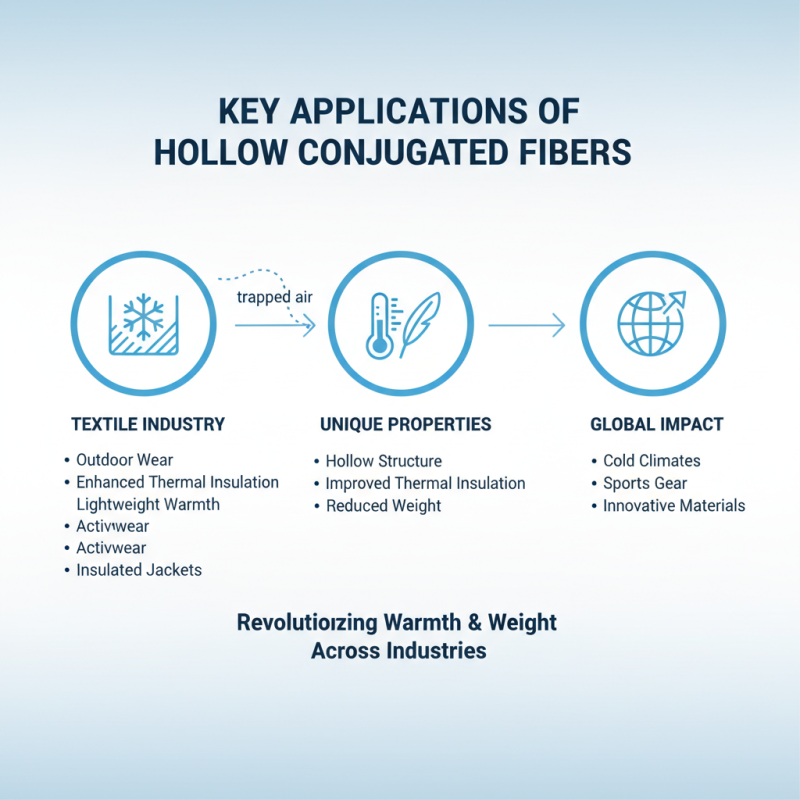
Hollow conjugated fibers are making waves across various industries. Their unique structure allows for improved thermal insulation and lightweight properties. In the textile industry, these fibers enhance the performance of outdoor wear. They trap air, providing warmth without adding bulk. This functionality is crucial for cold climate regions. Many manufacturers are exploring their potential in activewear and insulated jackets.
Another significant application lies in the automotive sector. Hollow conjugated fibers are being used in seat cushions and interior linings. They contribute to reduced weight, improving fuel efficiency. However, manufacturers face challenges in ensuring durability under stress. The balance between lightness and strength is still being researched.
In the construction industry, these fibers enhance insulation in building materials. Their ability to reduce thermal conductivity is invaluable. This leads to better energy efficiency in homes and commercial buildings. Yet, integrating these fibers into existing materials can be complex. Developers must navigate compatibility issues and performance standards. The ongoing study in these areas reflects the need for innovation and improvement.
Sustainability Trends in Hollow Conjugated Fiber Technologies
Sustainability trends are shaping the hollow conjugated fiber technology landscape. As global awareness of environmental issues grows, industries seek greener alternatives. Hollow conjugated fibers present an eco-friendly solution. According to a recent market analysis, the demand for sustainable materials in textiles is projected to grow by over 25% by 2026.
Hollow conjugated fibers offer unique features, such as lightweight insulation and breathability. These fibers contribute to reduced energy consumption during production. However, challenges remain. The recycling processes for these fibers are still not well-established. Industry experts stress the importance of developing closed-loop systems to enhance sustainability.
Moreover, researchers highlight the need for improved biodegradability in fiber production. Although advancements are being made, many conventional processes still produce significant waste. Addressing these inefficiencies is critical for long-term sustainability. Manufacturers must innovate to meet market demands while minimizing environmental impact. Balancing performance with eco-friendliness will define the future of hollow conjugated fiber applications.
Future Market Predictions for Hollow Conjugated Fiber Demand
The demand for hollow conjugated fiber is expected to rise significantly by 2026. Various industries, from textiles to automotive, will drive this trend. These fibers offer superior insulation and lightweight properties. They are essential in producing eco-friendly materials.
Tips: Consider how hollow conjugated fibers can enhance product sustainability. Explore their use in biodegradable textiles for environmentally conscious consumers.
The dynamic nature of this market calls for vigilance. Manufacturers must innovate to meet evolving consumer needs. Keeping abreast of technological advancements is crucial. However, there are challenges ahead. Supply chain issues could disrupt availability. The reliance on raw materials may lead to fluctuating prices.
Tips: Regularly assess market forecasts to make informed decisions. Engaging with industry experts can provide fresh insights and strategies. Understanding these variables is vital for navigating future trends.
Challenges and Opportunities in Hollow Conjugated Fiber Development
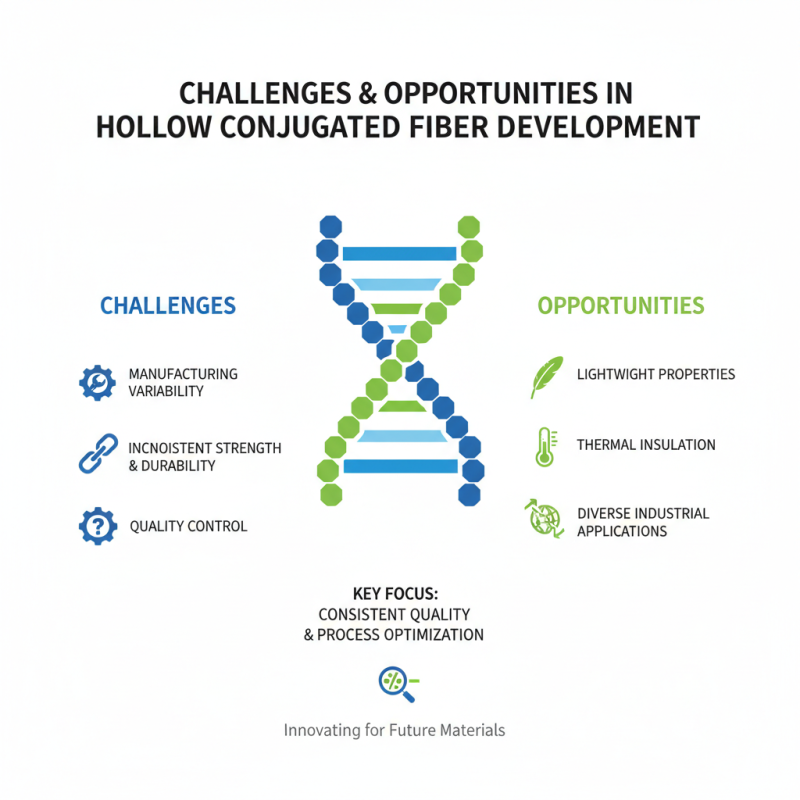
Hollow conjugated fiber technology presents significant opportunities and challenges in its development. The fibers are known for their lightweight properties and thermal insulation capabilities. However, achieving consistent quality remains a primary hurdle. Variability in manufacturing processes can lead to differences in strength and durability. This inconsistency complicates applications across industries.
Addressing these challenges requires innovation in production methods. Improving control during fiber creation is crucial. New techniques, including advanced spinning technologies, show promise. Yet, there is still a reliance on traditional methods, creating a tension between innovation and heritage. Additionally, as industries push for sustainability, the sourcing of raw materials must be reconsidered. The impact of these choices spans environmental and economic dimensions.
Moreover, market demand for high-performance textiles continues to rise. This growing need compels researchers to explore novel applications, from sportswear to automotive materials. While these prospects are exciting, the journey includes uncertainties. The trade-offs involved in performance, cost, and environmental impact ignite essential discussions. Continuous reflection on these aspects is key in pioneering the future of hollow conjugated fibers.