China Top 10 Recycled PSF Fiber Manufacturers 2026
China’s recycled polyester staple fiber sector is entering a more demanding phase in 2026. Buyers now examine more than price, production volume, and delivery speed. They want stable quality, traceable feedstock, credible certification, and clear environmental data. This guide introduces China’s top 10 Recycled Psf Fiber manufacturers through those practical standards.
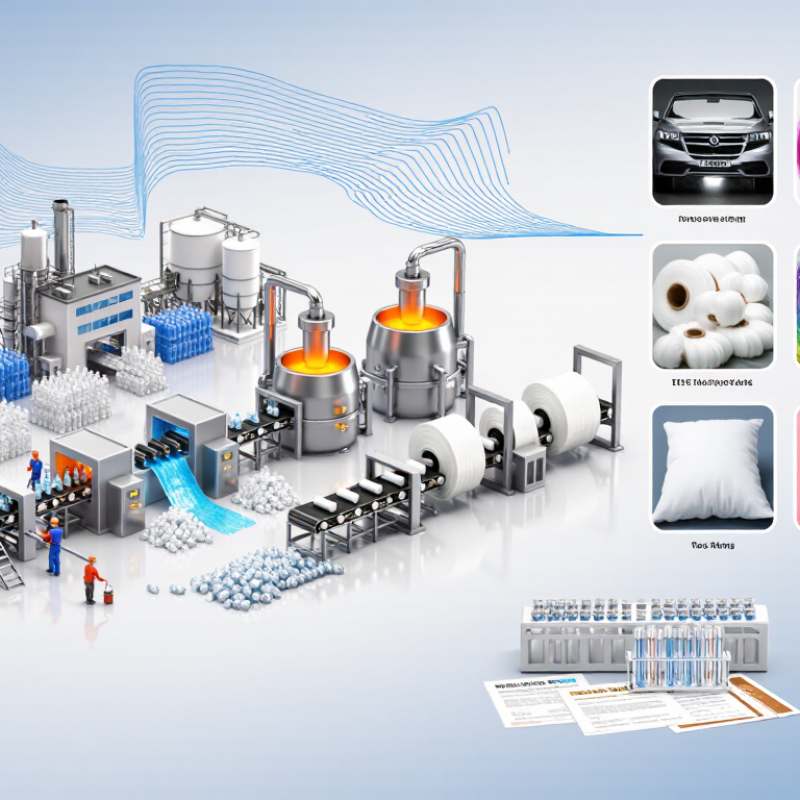
Dr. Sheng Lu, a recognized textile and apparel industry researcher, has said, “Recycled polyester can reduce reliance on virgin resources, but collection and processing systems determine the real benefit.” That point matters on the factory floor. Transparent PET bottles may arrive in compressed bales, then move through sorting, washing, flake production, melting, and spinning. Each stage can affect fiber color, strength, length, and consistency.
The manufacturers selected for this overview are considered through production capability, recycled content control, quality management, export experience, product range, and customer support. Their fibers may serve nonwoven fabrics, filling materials, automotive interiors, home textiles, and apparel blends. Some producers focus on bright white fiber. Others specialize in hollow conjugated fiber, low-melt fiber, or colored recycled staple fiber.
The ranking is not a perfect measurement. Public data can be incomplete. Certification alone cannot prove every operational claim. That deserves attention. A strong supplier should provide test reports, batch information, origin details, and realistic delivery commitments. Small differences in denier or crimp can change a finished product’s handle and performance. This introduction prepares readers to compare leading Chinese manufacturers with a more careful, evidence-based view.
Definition and Role of Recycled PSF Fiber in China’s Textile Industry
Recycled PSF, or recycled polyester staple fiber, is made by melting recovered PET and extruding it into short fibers. In China’s textile industry, it connects waste recovery with everyday material supply. It appears in spun yarns, mattress filling, home textiles, automotive fabrics, and nonwoven products. Denier, length, crimp, and surface finish affect softness, resilience, and processing behavior. That distinction matters.
Textile Exchange’s Materials Market Report 2024 estimated global fiber production at 124 million tonnes in 2023. Recycled polyester reached about 8.9 million tonnes, while most supply still came from PET bottles. China’s collection, polymer, spinning, and converting networks make recycled PSF commercially important.
China Chemical Fibers Association industry reporting also highlights quality control, traceability, and application development. These indicators help assess leading manufacturers, but they do not prove equal performance.
In factory trials, buyers should check melt viscosity, fiber fineness, tensile strength, moisture, color consistency, and batch certificates. A bright white staple fiber may still show unstable spinning performance. It is not waste-free. Mechanical recycling can reduce virgin feedstock demand, but sorting, washing, transport, and energy still create impacts. Textile Exchange’s chain-of-custody guidance supports stronger evidence, although results depend on electricity, yield, and end use. Capacity is visible. Transparent data is harder.
Criteria for Ranking China’s Top Recycled PSF Fiber Manufacturers in 2026
Ranking China’s top recycled PSF fiber manufacturers in 2026 requires more than comparing production capacity. Textile Exchange’s Materials Market Report 2024 recorded global fiber production at about 124 million tonnes in 2023. Polyester remained the dominant fiber group. This scale makes recycled feedstock quality a critical ranking factor. We assess verified recycled input, stable denier control, tensile strength, color consistency, and batch-to-batch reliability. Factory experience matters. A supplier should demonstrate regular testing records, not only impressive equipment photographs.
Traceability carries equal weight. The Global Recycled Standard requires documented material flow and chain-of-custody controls. Therefore, ranking evidence should include transaction records, independent audits, and valid certification scopes. Energy and water performance also deserve attention. The International Energy Agency reports that energy efficiency remains central to industrial emissions reduction. Manufacturers using closed-loop cooling, efficient spinning lines, and measured electricity data show stronger operational discipline. Wastewater records should be reviewed carefully, even when production is compliant.
Commercial reliability completes the evaluation. We compare delivery accuracy, technical support, complaint handling, and export documentation. Public capacity figures can be inconsistent. That is a weakness. Some factories report designed capacity, while others disclose actual output. Rankings should separate those figures. Site visits, laboratory checks, customer references, and third-party certification create a more dependable picture. Price alone cannot represent value. Recycled PSF with unstable strength may increase fabric waste and hidden costs. A transparent scoring model should reward verified performance, practical innovation, and continuous improvement, while acknowledging that available data is never perfect.
Profiles of the Top 10 Recycled PSF Fiber Manufacturers
The Top 10 Recycled PSF Fiber Manufacturers in China are profiled through practical production evidence, not advertising language. Each profile examines feedstock sources, washing systems, melt filtration, spinning capacity, and quality controls. These details show how manufacturers convert used PET materials into staple fibers for textiles, filling, and nonwoven products.
Several profiles focus on large bottle-to-fiber operations with automated sorting and stable color management. Others represent specialized producers making hollow, solid, low-melt, or siliconized fibers. Their equipment choices affect fineness, crimp, strength, moisture control, and downstream carding performance. One manufacturer may offer stronger traceability, while another may respond faster to custom denier requests. Production scale differs considerably.
Traceability matters.
Profiles review recycled content records, batch testing, tensile data, fiber length, and customer inspection practices. Independent certifications can support credibility, but certificates alone cannot prove consistent output. Records vary. Public technical information is also uneven, so some assessments rely on factory disclosures and market feedback. That is a limitation worth acknowledging. Buyers should request recent samples, test reports, packing details, and clear statements about post-consumer content before making decisions. A polished factory tour is useful, but repeatable performance matters more.
Production Processes, Raw Materials, and Quality Standards
China’s recycled PSF sector depends on controlled production, not only large output. A reliable 2026 manufacturer should explain every stage, from waste collection to finished fiber. Post-consumer PET bottles and textile scraps are sorted by polymer type and color. They are then crushed, washed, dried, and converted into clean flakes. Waste varies sharply.
During melt spinning, manufacturers heat the flakes and push the polymer through small spinnerets. The resulting filaments are drawn, crimped, and cut to the required staple length. Temperature stability matters here. Small changes can affect fiber strength, softness, and shrinkage. Skilled operators also monitor pressure, moisture, and filter performance throughout production.
Quality control should include denier, tensile strength, elongation, moisture content, color consistency, and oil residue. Testing should follow documented laboratory methods, supported by batch records and traceable raw materials. Certifications such as ISO 9001 or recycled-content standards can add confidence, but certificates alone prove little. Details matter.
A serious supplier should provide sample data, production photographs, and clear inspection procedures. Independent testing is useful when orders require strict specifications. Yet no factory is flawless. Recycled inputs may contain hidden dyes, mixed polymers, or uneven contamination. A credible manufacturer admits these risks and explains corrective actions. That honesty often matters more than polished marketing language.
Applications, Sustainability Practices, and Market Development Trends
China Top 10 Recycled PSF Fiber Manufacturers 2026
China’s leading recycled PSF fiber manufacturers are expanding beyond basic filling materials. Their products serve apparel insulation, home textiles, automotive interiors, filtration, and nonwoven fabrics. Hollow fibers are common in quilts and jackets because they improve loft with lower material weight. Solid fibers suit carpets, acoustic panels, and molded interior parts.
Textile Exchange’s Materials Market Report 2024 estimated global fiber production at 124 million tonnes in 2023. Polyester represented about 57% of that volume, while recycled polyester accounted for roughly 14% of polyester output. This gap creates room for China’s recycled PSF sector, especially where stable denier, crimp, and color consistency are required. Yet demand is not automatically sustainable.
Leading producers increasingly use bottle sorting, hot washing, melt filtration, and closed-loop water systems. Some facilities track energy use per tonne and verify recycled content through independent certification. The OECD’s Global Plastics Outlook reported that only about 9% of plastic waste was recycled globally in 2019. That figure exposes the industry’s unresolved weakness: collection quality still limits reliable feedstock. Mechanical recycling also faces problems with mixed colors, additives, and repeated heat exposure.
Market development is moving toward solution-dyed fibers, low-melt PSF, and finer deniers for lightweight products. Buyers now request traceability documents, carbon data, and contaminant controls. However, recycled content claims can remain difficult to compare across suppliers. More transparent factory-level data would improve trust, even if reporting initially reveals uncomfortable inefficiencies.
China Top 10 Recycled PSF Fiber Manufacturers 2026
Applications, sustainability practices, and market development trends
Recycled polyester staple fiber is mainly used in home textiles, nonwovens, apparel, automotive textiles, and filling materials. The 2026 benchmark highlights the growing importance of bottle-to-fiber feedstock, traceability, lower-energy production, wastewater control, and recycled-content certification. Values represent non-company-specific industry planning estimates for China and are intended for market comparison rather than company ranking.