

Industry News

How to Find Reliable Hollow Conjugate Suppliers?

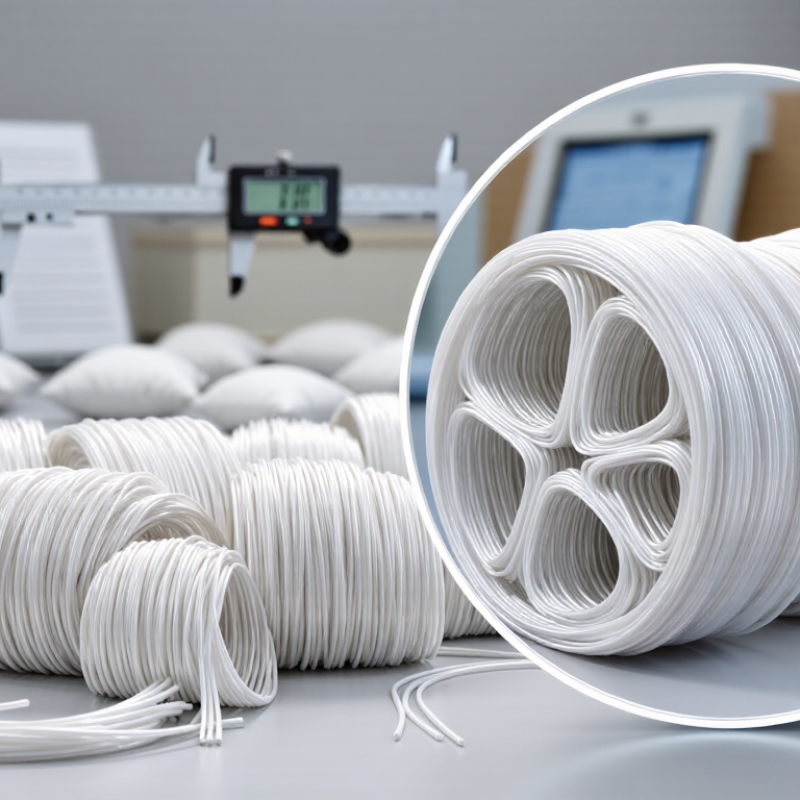
Finding a reliable Hollow Conjugate supplier requires more than comparing prices or downloading a product catalogue. This fiber is often used in pillows, upholstery, filtration, insulation, and automotive interiors. Its performance depends on hollow geometry, crimp stability, silicon treatment, denier, cut length, and filling resilience. A small variation can create visible clumping after repeated compression.

The market is expanding alongside wider synthetic-fiber demand. Textile Exchange’s Materials Market Report 2024 states that global fiber production reached about 124 million tonnes in 2023. It may reach approximately 160 million tonnes by 2030. This scale increases sourcing opportunities, but it also makes supplier verification more important. The same report highlights continuing concerns about recycled content, traceability, and environmental impacts. Therefore, buyers should request measurable evidence rather than accept broad sustainability claims.

A dependable supplier should provide technical data sheets, batch-level test results, and clear production records. Check denier, fiber length, hollow ratio, moisture regain, tensile performance, and recovery after compression. Ask whether testing follows recognized methods, such as ISO or ASTM procedures. Certifications such as GRS, OEKO-TEX STANDARD 100, ISO 9001, and ISO 14001 can strengthen confidence, although certificates must be checked for scope and validity. A factory video is useful. It is not proof.

Request samples from different batches and test them under realistic conditions. For example, compress filled cushions repeatedly, inspect fiber migration, and measure thickness recovery after 24 hours. Independent laboratory testing adds authority. Supplier audits add practical experience. I would not rely on one successful sample alone; that assumption can fail during mass production. Compare lead times, minimum order quantities, packaging, complaint handling, and corrective-action procedures. Reliable sourcing is built through evidence, communication, and repeatable quality—not persuasive promises.
How to Find Reliable Hollow Conjugate Suppliers?

Defining Hollow Conjugate Products and Their Industry Applications

How to Find Reliable Hollow Conjugate Suppliers?

Hollow conjugate products are synthetic fibers with internal voids and a crimped, multi-component cross-section. The hollow space improves loft and thermal insulation. The conjugate structure supports resilience after compression. Common applications include quilts, pillows, winter clothing, filtration media, and automotive acoustic insulation. A 2024 Textile Exchange report estimated global fiber production at about 124 million tonnes in 2023. Polyester represented more than half of this volume, increasing demand for engineered staple fibers.

Industry data also shows why application testing matters. Smithers’ nonwoven market research forecasts continued growth in technical nonwovens through 2029, especially in filtration and transport uses. A supplier should provide denier, cut length, hollow ratio, crimp level, finish type, and thermal performance data. Requesting a certificate of analysis for each lot is practical. Cross-sectional microscopy can confirm whether the claimed void structure is consistent. Small differences may change softness, fill power, or web formation.

A factory audit should examine carding, blending, packaging, and traceability controls. Ask for production samples, not only polished brochures. In trial orders, compare recovery after compression, moisture behavior, and fiber breakage. A glossy sample can mislead. No supplier is perfect, and test results may vary between lots. That is why clear tolerances, retained samples, and corrective-action records matter. Independent laboratory verification is useful when the material will contact skin or face strict performance requirements.

How to Find Reliable Hollow Conjugate Suppliers?

Hollow conjugate fibers are crimped staple fibers with a hollow cross-section and two or more polymer components. Their low density, resilience, bulk, and thermal insulation make them suitable for bedding, furniture, automotive interiors, filtration, and hygiene products.

The chart compares representative midpoint fineness values commonly specified for different hollow conjugate fiber applications. Bedding and furniture fillings generally use coarser fibers for loft and recovery, while filtration and hygiene products typically require finer fibers for web formation and uniform coverage. Actual specifications vary according to polymer type, hollow ratio, cut length, crimp, finish, and end-use performance requirements.

Identifying Supplier Qualifications, Manufacturing Capabilities, and Experience

How to Find Reliable Hollow Conjugate Suppliers?

Identifying Supplier Qualifications, Manufacturing Capabilities, and Experience

A reliable hollow conjugate supplier should provide clear qualification records. Ask for business registration, quality certifications, and material traceability documents. Certifications alone are not enough. Review how the supplier applies them during daily production. Request recent inspection reports for dimensions, wall thickness, surface finish, and mechanical performance. The reports should identify testing methods and acceptance limits.

Manufacturing capability deserves close attention. Check whether the supplier controls tooling, forming, joining, heat treatment, and final inspection internally. Ask about equipment accuracy and maintenance schedules. A capable factory can explain its tolerance limits without vague promises. It should also describe sampling plans, production capacity, and procedures for handling nonconforming parts. Photos help, but process records matter more. A polished workshop can still produce unstable batches.

Experience becomes visible through practical evidence. Request anonymized case details, production timelines, and examples of similar hollow conjugate designs. Speak with technical staff, not only sales representatives. They should understand material behavior, deformation risks, and dimensional changes after processing. A small trial order can reveal communication quality and consistency. Measure the samples independently. Some suppliers may offer attractive prices while overlooking minor deviations that become serious during assembly. I have found that early assumptions often fail when drawings lack datum references or inspection points. Ask direct questions, record every answer, and compare performance against documented requirements.

Evaluating Product Quality, Certifications, Testing, and Material Traceability

How to Find Reliable Hollow Conjugate Suppliers?

Finding reliable hollow conjugate suppliers requires more than comparing prices. Ask how the supplier defines fiber fineness, hollow ratio, conjugation, and crimp. Request recent specifications, not a general catalogue. Experienced buyers should inspect sample bales for consistent color, loft, moisture, and odor. A small sample can look perfect. Production lots may differ. That gap deserves attention. Review certifications for scope, validity, and issuing body. A certificate without matching product details proves little.

Ask for testing records from qualified laboratories. Check the test date, method, sample number, and product batch. Useful data may include denier, tensile strength, elongation, moisture, fiber length, and thermal behavior. Compare supplier results with your own verification tests. One report is not enough. Traceability should connect the raw material source, production line, batch code, packing date, and warehouse record. During an audit, request a batch-tracking demonstration. If staff cannot retrieve records quickly, reliability becomes uncertain. My own evaluation would still allow room for error, because paperwork can hide process variation.

Tips: Request samples from three production batches. Keep sealed reference samples for later comparison. Ask direct questions about rejected lots and corrective actions. Honest answers often reveal more than polished brochures. Do not accept vague claims such as “premium quality” without measurable evidence.

How to Find Reliable Hollow Conjugate Suppliers? - Evaluating Product Quality, Certifications, Testing, and Material Traceability

Anonymized supplier evaluation dataset for hollow conjugate fiber sourcing. Scores are based on document completeness, test evidence, consistency of specifications, and traceability controls.

Supplier ID Product Configuration Material Composition Typical Specification Quality Documentation Relevant Certifications Testing Evidence Material Traceability Batch Consistency Overall Reliability
Supplier HCF-01 Hollow conjugate staple fiber Polyester core and sheath 4.0 dtex × 51 mm; crimped; siliconized finish Complete
COA, SDS, technical data sheet, specification sheet
ISO 9001 certificate provided; chemical compliance declaration available Linear density, staple length, tensile strength, crimp, moisture, and hollow cross-section reports Strong
Polymer lot, spinning lot, finishing lot, and packing lot linked by batch number
Low reported variation across three reviewed lots 92 / 100
Supplier HCF-02 Hollow conjugate low-melt fiber Polyester low-melt sheath with standard polyester core 3.3 dtex × 51 mm; thermal bonding grade Complete
COA, SDS, processing guide, storage instructions
ISO 9001 certificate; REACH and restricted-substance declaration Melting behavior, DSC, linear density, tensile properties, and bonding-temperature tests Strong
Raw-material declarations and lot-specific COA retained for each shipment
Stable sheath melting range; minor variation in crimp level 89 / 100
Supplier HCF-03 High-loft hollow conjugate fiber Virgin polyester, two-component cross-section 7.0 dtex × 64 mm; high-bulk finish Complete
COA, SDS, product specification, inspection records
ISO 9001 certificate; product safety declaration supplied Bulk density, resilience, compression recovery, fiber diameter, and cross-sectional microscopy Strong
Electronic lot records include production date, line, operator, and raw-material batch
Good recovery performance across sampled lots 90 / 100
Supplier HCF-04 Recycled-content hollow conjugate fiber Recycled polyester core with polyester sheath 6.0 dtex × 51 mm; siliconized; carding grade Mostly complete
COA and SDS supplied; recycling process statement required
Recycled-content certificate available; ISO 9001 evidence under review Recycled content, tensile strength, linear density, staple length, and contaminant screening Moderate
Batch identification available; source-material segregation records incomplete
Acceptable results with wider color and denier variation 78 / 100
Supplier HCF-05 Fine-denier hollow conjugate fiber Virgin polyester, concentric sheath-core structure 1.5 dtex × 38 mm; soft-touch finish Complete
COA, SDS, specification sheet, packing standard
ISO 9001 certificate; chemical compliance documentation available Denier, fiber length, tensile strength, crimp, finish add-on, and microscopy Strong
Lot-level records retained from polymer receipt through final packing
Consistent fine-denier performance in reviewed samples 91 / 100
Supplier HCF-06 Hollow conjugate fiber for nonwoven applications Polypropylene core and polyester sheath 4.4 dtex × 51 mm; hydrophobic finish Partial
COA and technical data supplied; limited process records
Quality-management certificate submitted for verification Linear density, staple length, tensile strength, thermal stability, and wetting behavior Moderate
Shipment batch traceable; upstream polymer records not consistently attached
Variation acceptable for general nonwoven applications 75 / 100
Supplier HCF-07 Flame-retardant hollow conjugate fiber Modified polyester with flame-retardant component 5.5 dtex × 64 mm; low-smoke formulation Complete
COA, SDS, technical data, safety handling instructions
ISO 9001 certificate; flame-performance test documentation supplied LOI, vertical flame, thermal stability, tensile strength, and cross-sectional analysis Strong
Additive lot and polymer lot recorded against finished-fiber batch
Flame performance stable; tensile results require application-specific validation 87 / 100
Supplier HCF-08 Hollow conjugate fiber for insulation filling Virgin polyester, multi-void cross-section 8.0 dtex × 64 mm; slickened finish Needs follow-up
Basic COA supplied; independent test reports not yet provided
Certification claims require current copies and scope confirmation Internal linear-density and staple-length data available; third-party recovery test pending Moderate
Finished-product batch numbers available; raw-material linkage incomplete
Initial samples acceptable; insufficient data for full approval 68 / 100

Comparing Pricing, Minimum Orders, Lead Times, and Customization Options

Finding a reliable hollow conjugate supplier requires more than comparing a single price. Ask for a quotation based on fiber denier, length, finish, packaging, and monthly volume. A low price can look attractive, but it may exclude testing, delivery, or special packing. Request a sample before approving a production order. Check softness, crimp recovery, hollow structure, and filling performance in the actual product.

Minimum order quantities can affect cash flow quickly. Some suppliers accept a small trial batch, while others require several tons per specification. Ask whether mixed colors, lengths, or deniers count toward one order. This detail is easy to miss. A written price ladder helps reveal the real cost at 500 kilograms, one ton, and repeat volumes. Payment terms also matter, especially for smaller manufacturers.

Lead times should include raw material preparation, spinning, crimping, inspection, and shipment. Ask for a production calendar, not just a promised dispatch date. Customization may include siliconized finishes, colored fibers, recycled content, different hollow ratios, or altered cut lengths. Confirm which changes require new tooling or testing. I have found that technical claims are more useful when supported by test reports and retained samples. Still, supplier estimates are not perfect. Delays happen. Build a practical buffer, and record every agreed specification before placing the purchase order.

Verifying Supplier Reliability Through Samples, Audits, and Customer References

How to Find Reliable Hollow Conjugate Suppliers?

Verifying a hollow conjugate supplier starts with physical samples, not attractive product claims. Request several samples from different production batches. Examine fiber uniformity, hollow structure, crimp, length, and surface cleanliness under magnification. Ask for test data covering denier, moisture regain, tensile strength, and thermal behavior. Compare the documents with your own laboratory results. Small differences can expose weak process control.

An on-site or remote audit adds valuable evidence. Review raw material storage, carding equipment, drawing lines, and quality records. Check whether operators follow written procedures consistently. A reliable supplier should explain how it handles batch failures, complaints, and corrective actions. Customer references can reveal details that certificates often miss. Ask references about delivery accuracy, communication speed, sample consistency, and problem resolution. Speak with more than one customer if possible. One positive account is not enough.

Tips: Send the same technical questions to every supplier. Record sample measurements in a comparison sheet. Request traceable batch numbers on all samples. During an audit, observe ordinary production, not only a prepared showroom line. Be careful with perfect answers. Real factories usually have limitations, and honest suppliers can describe them clearly. I once treated a polished audit file as strong evidence, but later found that its testing frequency was too low. That mistake changed my review checklist. Reliability is built from repeated proof, not one impressive visit.