




Why Does Fiber Matter in Washing Reusable Sanitary Pads?
Fiber matters when washing reusable sanitary pads because it affects absorbency, drying time, comfort, and hygiene. Cotton, bamboo, hemp, and blended fabrics hold moisture differently. A thick cotton layer may feel secure, yet it can trap water deep inside. That trapped moisture may leave the pad damp after washing. Damp fabric can develop unpleasant odors and irritate sensitive skin.
Washing Reusable Sanitary Padsfiber should begin with the material label, not guesswork. Cold or warm water usually protects fibers better than very hot water. A gentle, fragrance-free detergent can remove blood and body oils without leaving heavy residue. Rinsing matters. Soap left between fibers may cause itching during later use. Dry pads completely in sunlight or a well-ventilated room. Sunlight can help reduce odors, although it does not replace proper washing.
Touch the thickest part before storage. It should feel fully dry, not merely warm. Avoid fabric softener because it can coat fibers and reduce absorbency. Some users may need an extra rinse, especially with sensitive skin. This is easy to overlook. Washable pads are practical, but they are not maintenance-free. Their performance depends on fiber structure and daily care.
Reliable textile guidance supports checking absorbency, drying behavior, and skin comfort over time. Still, personal experience can reveal problems that labels miss. If a pad stays damp, smells strongly after washing, or causes repeated irritation, stop using it and reassess the fabric, detergent, and drying method. A cleaner routine may require a little experimentation.
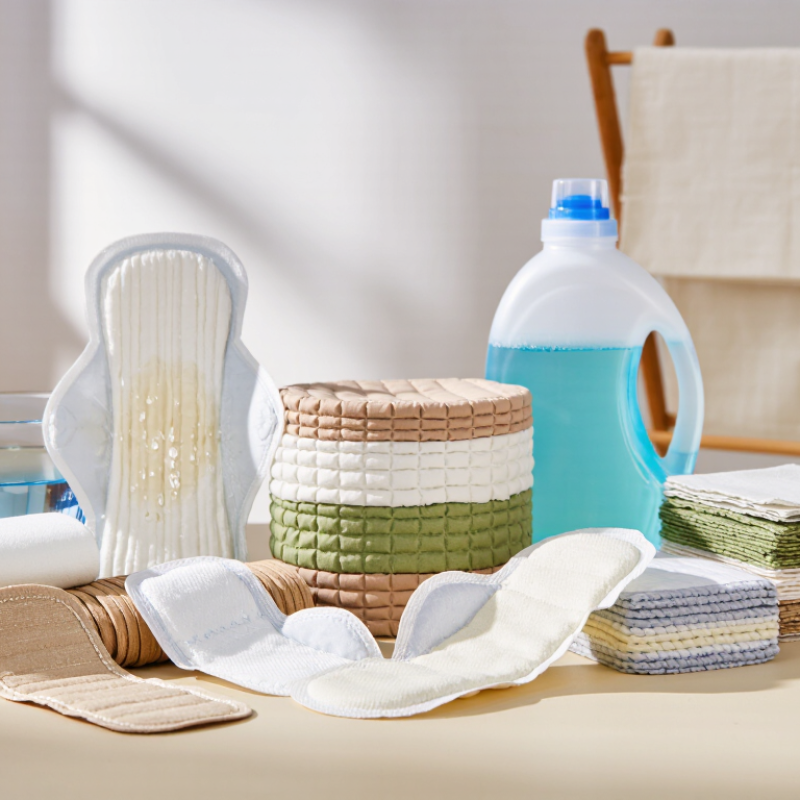
What Fibers Are Used in Reusable Sanitary Pads
Why Does Fiber Matter in Washing Reusable Sanitary Pads?
Reusable sanitary pads usually contain several fiber types, and each one behaves differently during washing. Cotton is common in the top layer because it feels soft and allows airflow. It can absorb steadily, but it may hold stains and shrink slightly in hot water. Hemp fibers are strong and absorbent. They often feel firmer before repeated washing softens them.
Bamboo viscose is another frequent material. It feels smooth against the skin and can absorb moisture well. However, it is regenerated cellulose, not raw bamboo fabric. That difference matters when judging softness, durability, and environmental claims. Some pads use polyester microfiber in the absorbent core. It dries quickly and holds its shape, but it may feel less natural. A waterproof backing often uses laminated polyester or polyurethane, which needs gentler heat.
Fiber changes the washing routine. I usually rinse a used pad with cool water before machine washing. Hot water can fix some stains and weaken certain laminated layers over time. A breathable cotton pad may tolerate warmer cycles, while a microfiber design often dries faster on a low-heat setting. Check the care label.
Small details matter.
I once assumed that thicker meant more absorbent. That assumption was too simple. Layer construction, fiber density, and stitching also affect leakage control. Washing several fabric types together can reveal differences after a few months. Some fibers soften beautifully; others lose shape sooner. Inspecting the edges and backing helps identify wear before the pad becomes unreliable.
Why Does Fiber Matter in Washing Reusable Sanitary Pads? – What Fibers Are Used in Reusable Sanitary Pads
| Fiber or Material | Typical Role in a Reusable Pad | Moisture Behavior | Drying Speed | Washing Considerations | Main Advantages | Limitations |
|---|---|---|---|---|---|---|
| Cotton | Skin-contact layer, absorbent core, or outer fabric | Hydrophilic; absorbs liquid readily and can hold a considerable amount of water within the fiber structure. | Moderate to slow, especially when several layers are saturated. | Usually tolerates warm washing. Thorough rinsing is important because retained detergent, body fluids, and oils can remain in dense layers. | Soft, widely available, breathable, and relatively easy to sew and maintain. | Can shrink, crease, and remain damp longer than many synthetic fabrics. |
| Bamboo Viscose | Soft absorbent layer or lining | Highly absorbent and hydrophilic; commonly used for a soft, smooth hand feel. | Moderate to slow because it holds moisture effectively. | Use a complete rinse cycle and avoid excessive heat, which may increase shrinkage or weaken the regenerated cellulose fibers over time. | Soft texture, good absorbency, and comfortable against the skin for many users. | May shrink or lose strength when repeatedly exposed to harsh washing, high heat, or aggressive agitation. |
| Hemp | Absorbent core or blended absorbent fabric | Hydrophilic and absorbent; often feels less soft initially than cotton but becomes more flexible with washing. | Moderate; thick hemp fabrics may need extended air-drying. | Rinse well and avoid excessive fabric softener, which can coat fibers and reduce liquid uptake. | Strong natural bast fiber with good durability and useful absorbency. | Can feel firm, wrinkle easily, and may become stiff if dried without sufficient agitation or airflow. |
| Microfiber Polyester | Absorbent core, usually enclosed inside the pad | Fine fibers create capillary spaces that move and hold liquid efficiently, although polyester itself has very low moisture regain. | Fast compared with most natural absorbent fibers. | Needs thorough rinsing because oils and detergent can remain between the fine fibers. Do not use it as the skin-contact layer unless the fabric is specifically designed for that purpose. | Lightweight, quick-drying, and capable of high liquid-holding capacity per layer. | Can retain odors or residues if under-rinsed; high heat may damage or deform synthetic fibers. |
| Polyester Fleece or Wicking Knit | Stay-dry skin-contact layer | Generally does not absorb much liquid into the fiber; it allows fluid to pass through or spread toward absorbent layers. | Fast. | Wash with sufficient detergent and rinse thoroughly. Avoid heavy use of fabric softener because it can reduce wicking performance. | Smooth, quick-drying, and useful for reducing the wet sensation at the skin. | Does not replace an absorbent core and may feel less natural than plant-based fibers. |
| Polyurethane Laminate (PUL) | Water-resistant or waterproof outer barrier | Does not function as an absorbent fiber; the laminated structure helps limit leakage while allowing some water-vapor transfer. | Fast to moderate, depending on the fabric weight and construction. | Use moderate washing temperatures and avoid ironing, chlorine bleach, and high dryer heat, which can damage the laminate or reduce its water resistance. | Thin, flexible, and effective as a leak-resistant barrier when properly constructed. | Heat, harsh chemicals, and repeated mechanical stress can cause delamination or cracking over time. |
| Wool | Occasional absorbent or moisture-managing layer | Can absorb water vapor and some liquid while still feeling relatively dry, but it is less common in standard reusable pad designs. | Slow to moderate, depending on thickness and airflow. | Use cool or lukewarm water, gentle agitation, and a wool-safe detergent. Avoid hot water and sudden temperature changes to reduce felting and shrinkage. | Good moisture management, warmth, and natural odor resistance. | Can shrink, felt, or irritate sensitive skin; requires more specialized care. |
| Spandex or Elastane Blend | Stretch component in fitted edges or blended fabrics | Provides elasticity rather than meaningful absorbency. | Fast when present in a lightweight blend. | Protect from high heat, chlorine bleach, and prolonged exposure to harsh chemicals because these can reduce elasticity. | Improves fit, flexibility, and comfort during movement. | Elasticity can deteriorate faster than the surrounding fabric under heat, chemicals, or repeated stress. |
Related Posts
-
The Future of Eco Friendly Menstrual Health Solutions
-

Why Choose Sustainable Sanitary Pads for Your Business?
-

Top Sustainable Sanitary Pads for Eco Friendly Menstrual Care?
-
2025 Top 10 Washing Reusable Sanitary Padsfiber for Eco Friendly Menstrual Care
-
Top 10 Benefits of Washing Reusable Sanitary Padsfiber for Sustainable Period Care?
-

Top 10 Benefits of Washing Reusable Sanitary Pads Fiber for Sustainable Health?