Top Polypropylene Microfiber Suppliers Worldwide?
Polypropylene Microfibers support filtration, hygiene, insulation, geotextiles, and advanced composite applications. Their fine diameter, chemical resistance, low moisture absorption, and lightweight structure attract manufacturers worldwide. Yet supplier selection involves more than comparing prices or advertised production capacity.
This guide examines leading polypropylene microfiber suppliers through practical and technical criteria. We consider fiber diameter, cut length, denier, surface treatment, tensile performance, and batch consistency. Production scale matters, but it does not guarantee dependable quality. A supplier may offer impressive machinery while providing limited documentation or uneven sample results.
Technical data sheets, certificates, factory experience, and transparent quality controls deserve close attention. Buyers should request representative samples, inspection records, packaging details, and realistic lead times. Small differences may become visible during carding, blending, concrete mixing, or high-speed filtration production. They can affect processing stability and final product performance.
No ranking is flawless. Market information changes.
Some suppliers disclose more than others. Regional regulations, export capability, and communication standards also influence purchasing decisions. This overview aims to provide a balanced starting point, not an absolute verdict. Its comparisons should be checked against current audits, laboratory testing, and application-specific trials. Experienced buyers may still identify gaps, especially where public information remains incomplete. That limitation deserves honest acknowledgment. A reliable partnership develops through verified evidence, clear specifications, and consistent performance over time.
What Is Polypropylene Microfiber and How Is It Used?
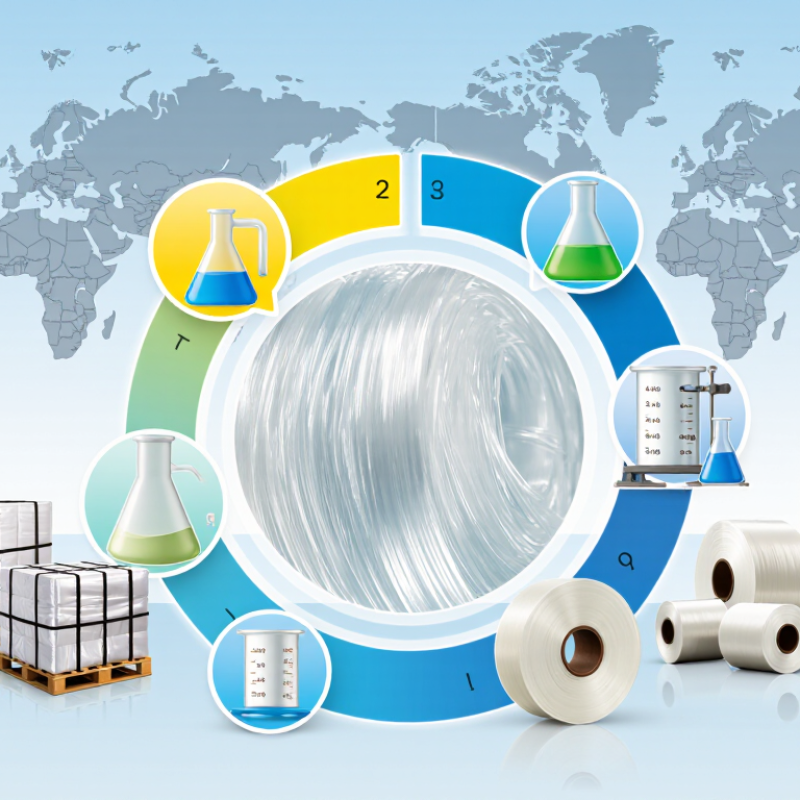
Polypropylene microfiber is an ultrafine synthetic fiber made by splitting or spinning polypropylene into very small filaments. Its low density creates lightweight fabrics with useful coverage and softness. The boundary is not perfectly fixed. Textile specifications often describe microfiber as finer than one denier, while some producers use diameter-based definitions.
Its practical value appears in filtration media, cleaning cloths, hygiene materials, geotextiles, and concrete reinforcement. The fibers resist moisture, many acids, and alkalis, so they perform well in damp industrial environments. They also dry quickly. Very practical. However, polypropylene has limited heat resistance compared with polyester or mineral fibers. Processors must control temperature during bonding, cutting, and molding.
Grand View Research estimates the global polypropylene fiber market reached about USD 4.2 billion in 2023, with continued growth projected through 2030. Industry reports from MarketsandMarkets also identify construction, filtration, and nonwoven products as important demand areas. These figures cover polypropylene fibers broadly, not microfiber alone. That distinction matters when comparing worldwide suppliers. Buyers should request denier, filament diameter, tensile strength, melting range, additives, and batch-test records. In my assessment, a low price can hide inconsistent splitting, uneven web formation, or excessive fiber shedding. Supplier claims need independent verification.
How to Evaluate Polypropylene Microfiber Suppliers Worldwide
Evaluating polypropylene microfiber suppliers requires more than comparing price per kilogram. Grand View Research projects steady polypropylene market growth through 2030, with demand supported by hygiene, filtration, construction, and automotive applications. That growth can hide uneven quality. Ask each supplier for fiber diameter, denier, tensile strength, elongation, moisture content, and melt-flow data. Request three production-lot samples, not one polished sample. Small differences matter.
I once treated a low quote as efficiency. It was not. A reliable supplier should explain extrusion settings, drawing ratios, cutting tolerances, and storage conditions in clear technical language. Check whether laboratory results come from calibrated equipment and independent testing. ASTM D3822 can support single-fiber tensile testing, while ISO 2060 helps verify linear density where yarn-based measurements apply. The standards are useful, but they do not replace factory observation.
Traceability deserves equal attention. The OECD Global Plastics Outlook reported 460 million tonnes of plastic production in 2019, increasing pressure to document feedstock and waste management. Request batch codes, production dates, origin records, and recycled-content verification when applicable. MarketsandMarkets’ polypropylene fiber analysis also indicates continued market expansion through 2028, making capacity claims harder to judge. Review monthly output, rejection rates, lead times, and contingency plans. Visit the plant if possible. Photos are not evidence. A supplier may pass every document check and still struggle with consistency during peak season. That uncomfortable possibility should remain in the evaluation.
Leading Regions for Polypropylene Microfiber Manufacturing
Polypropylene microfiber production is concentrated in East Asia, South Asia, Europe, and North America. East Asia offers dense polymer supply chains, specialized spinning equipment, and large conversion capacity. Manufacturers there often produce fibers for filtration media, wipes, concrete reinforcement, and insulation. South Asian plants are expanding through stronger textile infrastructure and competitive labor. However, capacity figures change quickly. Buyers should verify current output, export records, and plant-level certifications.
European facilities usually emphasize controlled processing, recycled-content documentation, and consistent denier control. Their laboratories may test tensile strength, moisture behavior, thermal stability, and fiber dispersion. North American producers benefit from established resin distribution and proximity to industrial customers. Regional strengths differ.
When comparing suppliers, request samples from multiple production lots, not one attractive shipment. Check fiber length, diameter tolerance, whiteness, additive disclosure, packaging, and storage conditions. Ask how extrusion temperature is monitored and how broken filaments are removed. A plant visit can reveal dust control and housekeeping that brochures miss. Some published claims remain difficult to compare because test methods vary. That uncertainty matters. My practical view is simple: regional reputation helps, but repeatable data and transparent communication deserve more weight than low pricing. Even experienced buyers can overlook seasonal logistics delays or inconsistent batch labeling.
Key Supplier Capabilities, Certifications, and Product Standards
Global polypropylene microfiber demand is growing with applications in filtration, wipes, concrete reinforcement, and technical textiles. Grand View Research valued the global polypropylene market at approximately USD 92.24 billion in 2023. Its forecast indicates a compound annual growth rate near 5.2% from 2024 to 2030. This growth makes supplier verification more important, not less. Reliable suppliers should document denier, cut length, crimp, moisture behavior, and thermal stability. They should also provide batch traceability and a clear certificate of analysis.
Quality systems deserve close inspection. ISO 9001 supports controlled production, while ISO 14001 indicates structured environmental management. ISO 45001 addresses workplace safety. Testing laboratories should preferably comply with ISO/IEC 17025. Relevant product checks may include linear density under ISO 1973 and tensile properties under ISO 5079. For buyers serving regulated markets, chemical declarations should address applicable REACH requirements and restricted substances. Certifications alone are not proof of consistent microfiber performance. Audit records, retention samples, and independent test results matter more.
Tips: Ask for three recent production batches, not one perfect sample. Compare fiber diameter, tensile strength, whiteness, and moisture regain. Request test methods and laboratory identities. A supplier may meet the specification while producing unstable lots. That risk is easy to overlook. I would also check packaging seals, pallet labels, and storage conditions. Small details often reveal weak process control. No checklist is perfect, so review complaints and corrective-action records before signing a long-term agreement.
Polypropylene Microfiber Suppliers Worldwide: Capability and Standards Benchmarks
Typical polypropylene fiber-diameter ranges by manufacturing route. These industry reference ranges help buyers evaluate supplier capability without ranking individual companies.
Quality management
ISO 9001 is commonly used to assess documented quality systems, process control, traceability, and corrective actions.
Environmental and safety systems
ISO 14001 and ISO 45001 address environmental management and occupational health and safety practices.
Material compliance
REACH, RoHS, and OEKO-TEX® Standard 100 may be relevant depending on the end use, market, and chemical-risk requirements.
Product verification
Request lot-specific data for basis weight, fiber diameter, tensile strength, air permeability, filtration performance, and uniformity.
Reference ranges shown are process-level industry benchmarks: meltblown nonwovens commonly use approximately 1–5 µm fibers, microfiber nonwovens commonly fall below 10 µm, and spunbond support layers are typically coarser. Actual specifications vary by polymer grade, die design, throughput, and application.