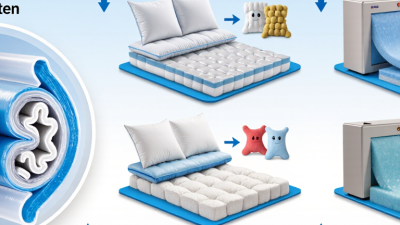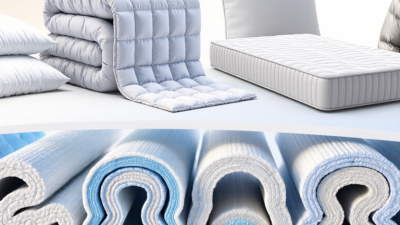

Hollow Conjugated Siliconized Fiber is commonly used as a resilient filling material in pillows, comforters, cushions, upholstered furniture, and some soft toys. Its hollow profile holds air, while crimped, conjugated strands help the filling retain loft after compression. A silicone finish can improve fiber-to-fiber slip, making the material feel softer and easier to process. These qualities explain its appeal in products that need lightweight volume and a springy hand. The exact performance still depends on fiber denier, cut length, crimp, and finish—not just the product name.
Industry data provides useful context, though it does not measure this specific fiber’s use. Textile Exchange’s Materials Market Report 2024 estimates that global fiber production reached 124 million tonnes in 2023, with polyester accounting for about 57% of the total. That scale reflects polyester’s broad role across textiles, but it should not be mistaken for evidence of demand for hollow conjugated siliconized grades alone. A more practical comparison looks at fill power, recovery after compression, wash durability, and applicable product standards. Touch the sample, then test it.
Manufacturers may choose this fiber when they want a soft, lofty fill without relying on heavier solid fibers. It can suit bedding and furniture applications, but it is not automatically the best choice for every product. Buyers should request technical data sheets and test samples under real-use conditions. Small differences matter. The name sounds precise; the specification deserves closer inspection.
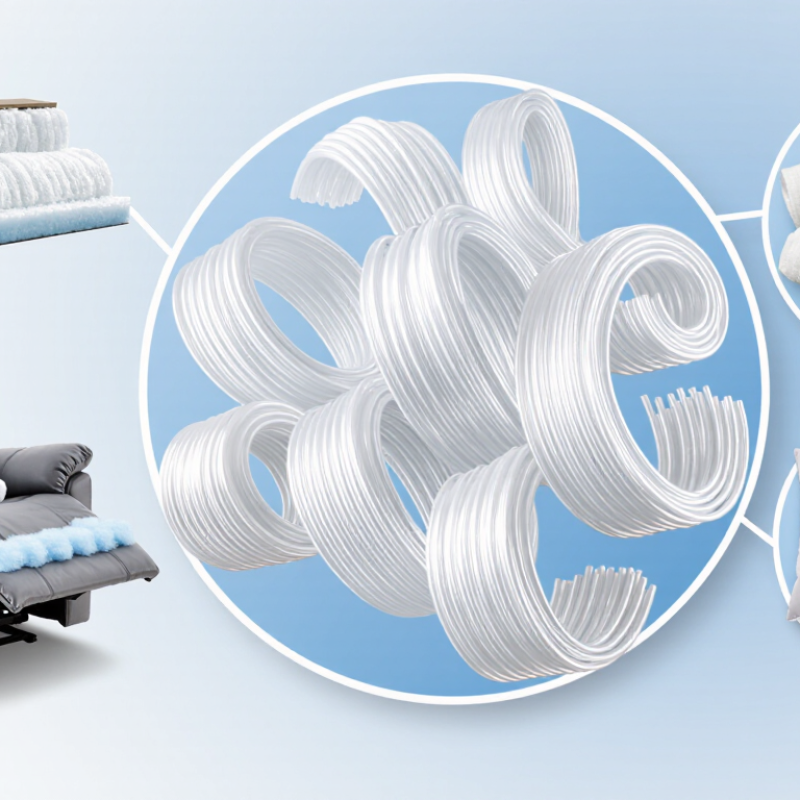
Hollow conjugated siliconized fiber is a synthetic staple fiber with three defining features. A hollow channel runs through each strand, while its conjugated structure encourages a natural crimp. A thin silicone finish helps fibers slide past one another. Under a hand, the material often feels soft and springy.
The hollow center traps air, adding lightness and helping fillings regain loft after compression. The crimp creates small spaces between fibers, which can improve cushioning and warmth. The silicone finish reduces friction, so fibers can move more freely during filling and use. That matters in pillows, quilts, cushions, and some soft toys. Not magic. Performance still depends on fiber length, fineness, crimp, and how tightly the product is filled.
The name can make the material sound uniform, but specifications vary. “Conjugated” may describe different arrangements of polymer components, and the hollow profile may differ between grades. Too much compression can still flatten a filling, and a slick surface does not guarantee lasting loft. For a real product, check its composition, care guidance, and recovery after repeated squeezing. A pillow sample tells you more than a technical name alone.
Hollow conjugated siliconized fiber is commonly used as filling in pillows, comforters, cushions, and soft toys. Its hollow center can trap still air, while its crimped shape creates space and helps the fill spring back after compression. A silicone finish helps fibers slide past one another, making the filling easier to distribute. The result can feel light and lofty.
Small detail. Noticeable difference.
In a pillow, crimp may help restore some loft after a night’s use. Hollow fibers can also provide volume without the weight of an equivalent amount of solid fiber. But resilience is not permanent. Repeated pressure, washing, moisture, and the fabric shell all affect how well a finished item holds its shape. Fiber thickness, cut length, and fill weight matter, too. A loose fiber sample may feel excellent, yet behave differently inside a tightly sewn cushion.
Tips: Compare filled samples, not just loose fiber. Squeeze and release them several times, then check recovery. Ask for fiber specifications and care guidance. If the product is washable, test its loft after laundering; a silicone finish alone cannot guarantee lasting performance.
What Is Hollow Conjugated Siliconized Fiber Used For?
How the Silicone Finish Affects Handling and Performance
Hollow conjugated siliconized fiber is commonly used as fill in pillows, comforters, cushions, and stuffed products. Its hollow structure and crimp create loft and help trap air, giving products a light, cushioned feel. The silicone finish affects how fibers move against one another. They slide more easily during opening, blending, and filling. A handful feels smooth and springy, not sticky. This can help filling equipment run evenly, though machine settings still matter.
Tips: Test a small batch before scaling production. Check whether the fiber opens cleanly, feeds steadily, and settles evenly in a sample cushion. Compare loft after compression, not just straight from the bag. Too much slip or an uneven finish may let loose fill shift. Too little can make processing drag. Small trials help.
For users, the finish mainly affects handling and feel; warmth also depends on fill weight and construction. A pillow should regain shape after a squeeze, but hollow fiber can flatten with use. That is worth checking over time. The cover fabric and care routine can change the results, too.
| Fiber Feature | How It Works | Effect on Handling and Performance | Common Uses | Practical Considerations |
|---|---|---|---|---|
| Hollow cross-section | A hollow channel reduces the amount of polymer in each fiber relative to a solid fiber of similar outside dimensions. | Can provide bulk and loft at relatively low weight. The trapped air also contributes to insulation in loose-fill products. | Pillow and cushion filling, comforters, sleeping bags, and some insulating products. | Actual warmth, weight, and resilience depend on fiber dimensions, fill construction, and product design. |
| Conjugated structure | Two polymer components are arranged together within a single fiber. Differences in their shrinkage during heat treatment can create crimp. | Crimp helps fibers interlock and supports bulk and recovery after compression. | Resilient filling for pillows, cushions, quilts, and selected nonwoven applications. | Crimp development depends on fiber construction and processing conditions; it is not determined by the silicone finish alone. |
| Silicone finish | A surface treatment lowers friction between fibers and can make the fiber feel smoother and more slippery. | Usually improves fiber separation, opening, blending, and movement through filling equipment. It can also improve the soft, slick hand of the finished filling. | Loose-fill products where easy processing and a soft, resilient feel are desired. | Finish level and application uniformity affect results. Excessive or poorly suited finish may affect downstream bonding or finishing processes. |
| Loft and resilience | Hollow structure supplies bulk, while conjugate-generated crimp helps the fiber resist flattening. | Can help filling remain lofty and recover after ordinary compression, depending on fiber specification and construction. | Bedding, stuffed articles, cushions, and lightweight padding. | Repeated compression, moisture, laundering, and product construction can influence long-term recovery. |
| Fiber-to-fiber movement | The lubricating effect of the silicone finish reduces resistance as fibers slide past one another. | Can make filling easier to distribute and help reduce clumping during opening and filling operations. | Automated or manual filling of pillows, toys, and other stuffed products. | Good opening and blending still depend on equipment settings, fiber length, crimp, and storage condition. |
| Thermal and air-trapping behavior | Fiber bulk and the spaces between fibers can hold still air, which slows heat transfer. | Supports lightweight insulation in loose-fill constructions; the hollow channel is only one part of the overall thermal performance. | Comforters, sleeping bags, and some apparel or home-textile insulation layers. | Performance varies with fill density, loft retention, fabric shell, and the movement of air and moisture. |
| Blend compatibility | Siliconized fibers can be blended with other staple fibers when their dimensions and processing requirements are compatible. | May improve blend opening and fiber mobility, while the other fiber components contribute their own hand or functional properties. | Custom filling blends and selected nonwoven or padding constructions. | Test blends before production, especially when bonding, coating, or other surface-sensitive operations are required. |
| Selection and quality checks | Relevant specifications can include fiber fineness, cut length, crimp, hollow profile, finish level, and cleanliness. | Matching these properties to the intended equipment and end use helps achieve consistent opening, filling, loft, and feel. | Product development, purchasing, and incoming quality inspection. | Exact specifications and performance should be confirmed with representative samples and application-specific testing. |
Hollow conjugated siliconized fiber is a crimped polyester staple with a hollow center and a smooth surface finish. In bedding, these features help create resilient fill for pillows and comforters, where loft and soft hand matter. The hollow structure can reduce fill weight, while the crimp helps the fibers hold space. The feel still depends on fiber denier, fill density, and construction. Small details matter.
For apparel, manufacturers may use it in lightweight insulation or padded linings; it is not a substitute for every performance fiber. In toys, its springy, soft fill can suit plush bodies, but seams and closures must contain it securely. Upholstery cushions also use resilient polyester fills, though frequent compression can flatten them over time. Textile Exchange’s Materials Market Report 2024 estimates that global fiber production reached 124 million tonnes in 2023, with polyester representing 57%. That figure gives useful industry context, not proof that this specific fiber suits every product. Check recovery, wash performance, and relevant product-safety requirements before choosing it. One caveat: “siliconized” describes a finish, and its feel or durability can vary by supplier and process.
What Is Hollow Conjugated Siliconized Fiber Used For?
Key Factors for Choosing Fiber in Different Applications
Hollow conjugated siliconized fiber is commonly used as loose fill in pillows, quilts, cushions, and soft toys. Its hollow sections can help trap air, while the crimped shape adds loft and resilience. A silicone finish helps fibers slide past one another during filling. That can make a cushion feel smoother and less prone to clumping at first. Feel matters. These qualities do not guarantee lasting softness, though; construction and care matter too.
Choose fiber by the product’s job, not just its advertised loft. A pillow may need resilient fill that springs back after repeated compression, while a quilt may favor lighter fill and even coverage. For cushions, check how well the filling recovers under weight. Also consider fiber fineness, cut length, fill weight, shell fabric, and washing instructions. A sample can mislead. Test a filled item after compression and laundering, using conditions close to real use. If warmth, shape retention, or hand feel is critical, compare several samples and record the results. There is no perfect fill; the best choice depends on the user, product design, and expected care.