
Choosing a Hollow Conjugated Siliconized Fiber starts with its end use, not its product label. A pillow, quilt, and stuffed toy place different demands on softness, loft, resilience, and wash durability. The fiber’s hollow profile can support loft, while conjugated crimp helps create a springier structure. Silicone finishing may improve slip and hand feel. Performance still depends on fiber fineness, cut length, crimp consistency, and processing.
The scale of the wider market makes careful specification worthwhile. Textile Exchange’s Materials Market Report 2024 estimates global fiber production reached 124 million tonnes in 2023, with polyester representing about 57 percent. That figure covers polyester broadly; it does not measure this specialty fiber alone. Buyers should therefore request current supplier test data, including fiber fineness, resilience after compression, and recovery after washing. Ask for samples, too. Feel them.
For an expert perspective, Dr. Seshadri Ramkumar is a recognized nonwovens researcher. I could not verify a published, verbatim quotation from him specifically about siliconized hollow conjugated fiber, so attributing invented words would be misleading. His field offers a useful selection principle: assess materials in their intended end use, not by claims alone. Compare samples under the same filling weight and test conditions. A fiber that feels plush on delivery may lose loft after repeated washing. That detail is easy to miss. This guide examines the practical trade-offs, questions to ask suppliers, and evidence worth checking before choosing.
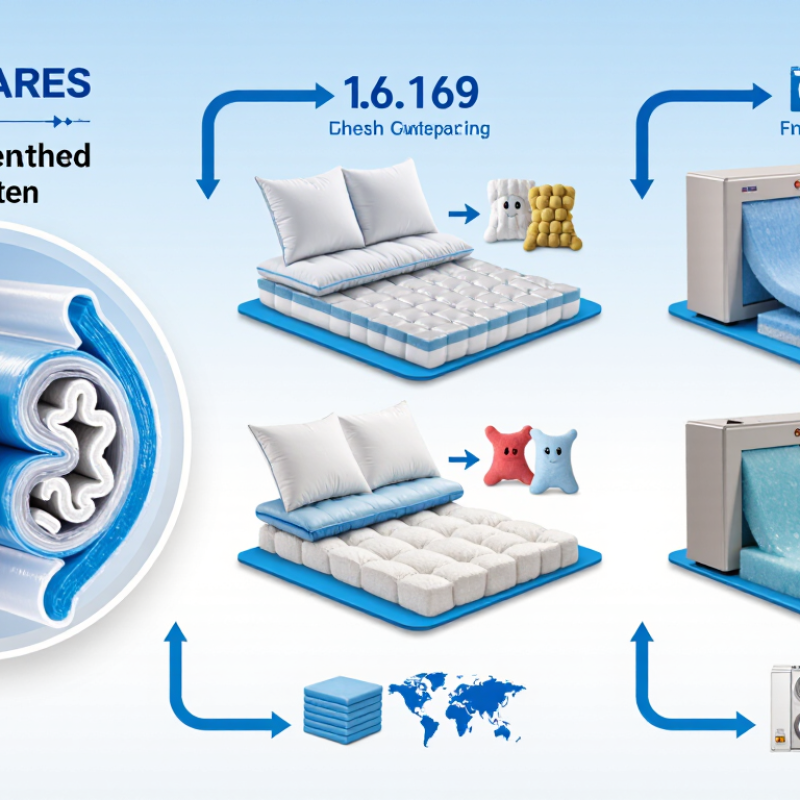
Hollow conjugated siliconized fiber is commonly made from polyester. Its hollow center can trap air, adding loft without making a filling feel overly heavy. The spiral-like crimp helps fibers recover after compression, while the silicone finish makes them slide more smoothly against one another. These features can suit pillows, comforters, and soft cushioning. Not magic, though. Results depend on fiber specifications and how the finished product is assembled.
When comparing options, check denier, fiber length, hollow structure, and crimp consistency. Ask whether the specifications describe the fiber itself or the finished blend. A finer fiber may feel softer, but softness alone does not predict lasting loft. In a pillow sample, press the filling with your hand, then watch how quickly it rebounds. Also check whether it clumps or shifts inside the cover. Small differences matter. If possible, compare samples under the same conditions; a quick touch test can be misleading.
Tips: Match the fiber to the product’s use and desired feel. For bedding, consider loft, recovery, and wash-care requirements together. Request clear technical data, and test a representative sample before committing to a large quantity. One detail is easy to overlook: a very smooth finish may not suit every blend or filling design.
Choosing hollow conjugated siliconized fiber starts with the product’s job. A duvet needs soft loft and recovery after compression. A seat cushion needs stronger support and less permanent flattening. For toys, consider shape retention, hand feel, and how evenly the filling can be distributed. One fiber cannot serve every purpose equally well.
Textile Exchange’s Materials Market Report 2024 estimates that global fiber production reached 124 million tonnes in 2023, with polyester making up 57%. This market scale does not prove that a particular fiber performs well. It does make careful specification important. Check denier, cut length, crimp, hollow structure, and finish against the intended use. Siliconized fibers typically slide more easily during filling, but excessive slipperiness may encourage shifting inside some products. That detail is easy to miss.
Set measurable targets before requesting samples. For bedding, compare loft, compression recovery, and feel after repeated handling. For cushions, test firmness and thickness retention under load. Ask suppliers for test methods and sample conditions; results can vary with moisture, temperature, and test setup. Then make a small prototype. Feel it. Measure it. A first trial may still disappoint, and that is useful evidence. Adjust the specification before ordering at scale.
Match fiber performance priorities to the intended application
The scores show relative selection priorities on a 1–5 scale, not measured fiber properties. Use them as a planning guide, then confirm fiber specifications and finished-product performance through testing.
How to Choose the Best Hollow Conjugated Siliconized Fiber
Comparing Fiber Structure and Key Specifications
Hollow conjugated siliconized fiber combines a hollow center, a crimped shape, and a slick finish. Each feature affects performance. The hollow structure can add loft without making a filling feel overly dense, while crimp helps fibers catch and support one another. Siliconization reduces friction, helping the fiber move through filling equipment and feel smoother in the finished product.
Compare denier and cut length with your intended use. Finer fibers can create a softer, more even feel; coarser options may provide a firmer, springier fill. Shorter cuts can blend readily, but may behave differently during processing. Check crimp consistency, too. Uneven curls can lead to patchy loft in a cushion or quilt. Small details count.
Ask for a technical data sheet that identifies fiber dimensions, hollow structure, finish, and recommended processing conditions. Then test a representative sample in your own equipment. Measure recovery after compression and inspect whether the fill distributes evenly. Feel the difference. A sample may seem excellent by hand yet lose loft after repeated packing. There is no single best specification; the right choice depends on end use, process settings, and the balance of softness, resilience, and cost.
Choosing hollow conjugated siliconized fiber requires more than judging a fluffy sample. Check denier, cut length, crimp recovery, and siliconization consistency against the product specification. Ask for test results from the same production lot, not a generic sample sheet. Textile Exchange’s Materials Market Report 2024 estimates that global fiber production reached 124 million tonnes in 2023, with polyester accounting for about 57%. That scale makes traceable sourcing worth checking; the figure does not certify any individual fiber. Small details matter.
Safety needs documented checks. Request chemical test reports, a restricted-substances declaration, and clear handling guidance. For fill applications, ask about dust, odor, and fiber migration under the intended processing conditions. Supplier reliability is visible in batch records, change-control procedures, and realistic lead times. A polished brochure helps less than a dated report with methods and results. I would still question a perfect-looking sample if its batch history is missing.
Tips: Compare samples under the same light and compression. Keep a retained sample, record the lot number, and test recovery after repeated compression. Confirm that the supplier can reproduce the specification across orders, not just once.
| Evaluation Area | What to Check | How to Assess It | Practical Buying Guidance | Evidence to Request |
|---|---|---|---|---|
| Fiber composition | Polymer type, component structure, and whether the fiber is hollow, conjugated, crimped, and siliconized. | Compare the product specification with a representative sample; use microscopy or other suitable laboratory analysis when confirmation is needed. | Specify the required polymer and construction in the purchase specification. These product features alone do not establish overall quality. | Technical data sheet, product specification, and sample identification. |
| Linear density | Fiber fineness, commonly expressed in dtex (grams per 10,000 metres). | Check the stated value and tolerance; individual-fiber linear density can be determined using ISO 1973. | Set the target according to the end use and processing equipment. There is no single ideal dtex value for every filling or nonwoven application. | Test report showing the method, result, test date, and lot number. |
| Cut length | Staple length and length consistency. | Compare the declared cut length with measurements using an agreed method, such as ISO 6989 where applicable. | Choose a length compatible with the intended carding, blending, or filling process; agree on tolerances before ordering. | Product specification and lot-specific length test results. |
| Hollow structure | Presence and consistency of the hollow cross-section. | Review cross-sectional microscopy from representative fibers. Ask the laboratory to state its sampling and measurement procedure. | Agree how hollow structure will be verified. Do not rely on a hollow-content percentage unless its definition and test method are clearly stated. | Microscope images or a test report linked to the production lot. |
| Conjugate crimp | Three-dimensional crimp, crimp consistency, and recovery after compression or processing. | Assess a representative sample using an agreed crimp or resilience test relevant to the product’s intended use. | Compare samples under the same conditioning and test procedure. Performance can vary with fiber geometry, finish, and processing conditions. | Test method, sample-conditioning details, results, and retained reference sample. |
| Silicone finish | Finish identity, application consistency, and effect on fiber handling. | Evaluate lubrication, fiber opening, static behavior, and compatibility in a trial using the intended process. Request chemical information for the finish. | “Siliconized” does not specify a universal finish level or performance. Define functional requirements and any chemical restrictions in writing. | Finish declaration, safety data sheet where applicable, and trial results. |
| Tensile properties | Breaking force and elongation of individual fibers. | ISO 5079 covers determination of breaking force and elongation at break of individual textile fibers. | Use results to compare lots or suppliers under the same test conditions; set acceptance limits based on the application. | Laboratory report identifying the method, conditioning, sample size, and results. |
| Appearance and contamination | Color, visible foreign matter, fused fibers, and packaging cleanliness. | Inspect representative samples from multiple bales or packages under consistent lighting and handling conditions. | Define visual defect categories and sampling rules before shipment. Appearance checks do not replace chemical or performance testing. | Inspection record, agreed defect criteria, and production-lot traceability. |
| Batch consistency | Variation in key properties between production lots. | Compare lot-specific results for agreed properties such as linear density, length, and tensile performance. | Review trends over multiple lots rather than judging consistency from a single sample. Agree on change-control notification requirements. | Certificates of analysis or equivalent batch records, with defined acceptance limits. |
| Chemical and product safety | Relevant restricted substances, chemical disclosures, and any applicable market requirements. | Identify the destination market and end use, then select suitable testing and documentation. For EU supply chains, assess applicable REACH obligations; REACH is a regulation, not a product certificate. | Request current documents for the exact product and confirm their scope. Treat optional labels or certifications as valid only when independently verified and applicable to the supplied product. | Safety data sheet where required, chemical declarations, relevant test reports, and verifiable certification documents if claimed. |
| Odor and emissions | Unwanted odor or emissions that may matter for the finished product and its intended indoor use. | Agree on a suitable evaluation protocol and test conditions with a qualified laboratory; assess the finished application where appropriate. | Do not assume that a fiber-level result predicts emissions from every finished product. Specify the test method and acceptance criteria in advance. | Test report identifying the sample, conditioning, method, and intended scope of the result. |
| Supplier quality system | Documented inspection, complaint handling, traceability, and corrective-action processes. | Review quality procedures and, where practical, audit the production and lot-control process. | Confirm how nonconforming material is contained, investigated, and prevented from recurring. | Quality-system documents, audit findings, and examples of corrective-action records. |
| Supply reliability | Production capacity, lead-time stability, order flexibility, and continuity planning. | Compare committed lead times with actual delivery history and discuss contingency arrangements. | Set clear terms for order changes, shipment scheduling, and notice of material or process changes. | Capacity and lead-time statements, delivery records, and written change-notification procedures. |
| Packaging and traceability | Protection from moisture, dirt, and handling damage; legible identification of each lot. | Inspect packaging and labels on receipt; confirm that package identifiers match shipping and quality documents. | Agree on packaging, storage, labeling, and traceability requirements before the first shipment. | Packaging specification, lot labels, and shipment documentation. |
| Sample and production approval | Whether the approved sample represents routine production. | Run a production trial using the intended equipment and compare it with a retained approved sample. | Approve against written criteria, then require notice and reapproval for significant changes to material, finish, or process. | Signed sample approval, trial record, and agreed product specification. |
Selecting and Testing the Best Fiber for Your Needs
Start with the finished product, not a catalog description. A cushion, jacket, and plush toy need different levels of softness, loft, and recovery. Check the fiber’s length, fineness, and hollow structure against your filling equipment and desired feel. Siliconized fibers often slide more easily, which can help filling flow, but too much slip may affect stability. Small differences matter. Ask for a specification sheet and confirm that test methods and units are clear.
Compare samples under the same conditions. Fill identical fabric cases with equal weights, then note bulk, hand feel, and how evenly the fiber spreads. Compress each sample for a set time and measure its recovery after release. If the product will be washed, test samples through repeated care cycles and check for clumping or lost loft.
Keep temperature, load, and drying method consistent.
Not always.
A quick hand test is useful, but it cannot predict long-term performance by itself. Record results, including flaws, and request a larger sample before committing to production. A bench test may still miss changes caused by real sewing lines or storage conditions, so treat early findings as evidence, not a guarantee.